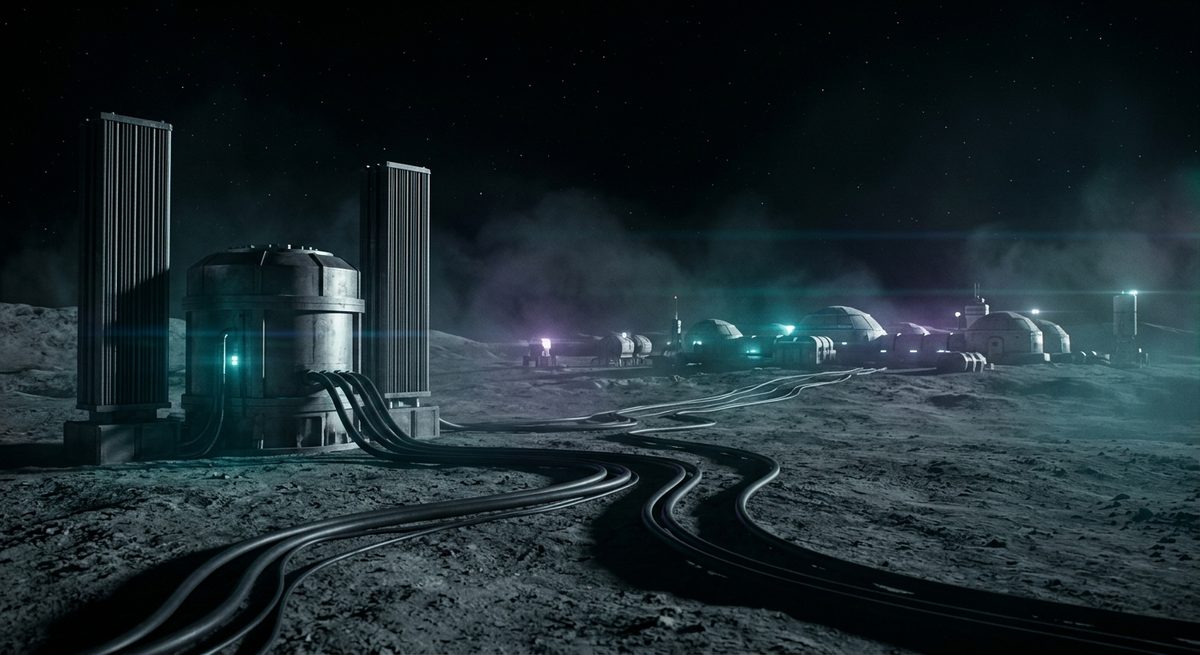
NASA and the U.S. Department of Energy renewed their partnership to develop a fission surface power system for the Moon under the Artemis campaign and for future Mars missions. NASA stated an intent to place a nuclear reactor on the lunar surface by the first quarter of fiscal year 2030 and scheduled an industry day for September 9, 2025, at NASA’s Glenn Research Center in Cleveland.
A lunar fission reactor would provide continuous power independent of sunlight, reducing dependence on large solar arrays, batteries, fuel-cell reserves, and vulnerable Earth-based logistics. This directly addresses the Moon’s approximately 14-day night and enables persistent operation of life support, thermal control, communications, food production, scientific archives, and maintenance systems. The programme also has strategic value because NASA identifies nuclear power as central to Artemis, a robust lunar economy, Mars power generation, and national space security.
The Ark team should track the reactor procurement timeline, system power and lifetime specifications, fuel and shielding architecture, launch-safety requirements, surface deployment methods, and compatibility with regolith shielding and geographically protected sites. Ark habitat designs should reserve interfaces for nuclear power, thermal rejection, electrical redundancy, and autonomous reactor operations, while research prioritises multi-reactor architectures capable of surviving component failures without loss of archival or life-support functions.